Wednesday, July 6, 2011

Radiance of the Seas remodel lives up to ship's name. Royal Caribbean cruise ship leaves Victoria in tip-top shape

By Phil Reimer, for Postmedia News
My first impression after boarding Royal Caribbean's Radiance of the Seas in Victoria was that the ship was being decommissioned.
While the outside of the ship had not changed, at that point, the inside public areas were virtually gutted.
It turned out that Radiance, the oldest in of the Radiance Class ships, was being remodelled -refurbishing is a word that does not do it justice.
Built in 2001, the 2,500-passenger ship was taking on many of the successful features you will find on Oasis of the Seas and Allure of the Seas, the two biggest cruise ships in the world.
It can take months to remodel a home. However, when you have $30 million to spend and 1,000 workers at your service, you would be amazed at what can be accomplished in 21 days. When you add up the projects, there were 1,000, some lasting a few days, others lasting a few hours. With military precision, the Victoria Shipyard made it on time for the remodelled ship's first cruise to Alaska on June 10. This was also a chance for the yard to show off to the federal government, in hopes of getting a piece of the $35 billion earmarked for new and remodelled ships for the navy, and beyond, over the next few decades.
Radiance of the Seas was also being remodelled to save money. With a new special paint on the bottom of its hull and a few changes to the propulsion system, it will save 5,500 gallons of fuel a week.
This makeover is all part of the "Royal Advantage" program, which is being undertaken for older members of Royal Caribbean's fleet. Splendor of the Seas is next.
Radiance added seven new restaurants during its stay in dry dock and, yes, some have a price attached. Samba's, a Brazilian Churrasco-style restaurant -think meat -is $25 for dinner only. Giovanni's Table, for Italian dining, is $15 for lunch and $20 for dinner. Izumi, fashionably Asian Fusion, has à la carte pricing. The Park Cafe deli, the "Dog House" for those who love hotdogs, the Quill and Compass Pub, and Rita's Cantina's, a Mexican restaurant, are all part of your cruise price. Also opening will be the Chef's Table, at $95, one of the most expensive restaurants at sea and with room for only 16 guests each night. For your money, you get five courses and complimentary wine.
There's more. All staterooms will be refurbished with new flat-screen TVs and Wi-Fi in the cabins and all public areas. The public areas are getting miles and miles of new carpet. The pool was in the process of getting a new deck and the movie screen was bigger: 15 feet by 30 feet. It will be used for movies at night, specials and major sports events.
When it heads south for the winter, Radiance of the Seas will have a series of itineraries that include 12-night trips from Sydney to the South Pacific, including Nouméa, Vanuatu and New Caledonia, as well as the traditional 14-night cruises to New Zealand.
Thumping Canada's chest here, all the senior managers on this project were lavish in their praise of the Canadian workers. The captain, Claus Andersen, raved especially about the quality of the work being performed. That's high praise from a crew that works with shipyards around the world.
As for what it costs to cruise on this remodelled Radiance, here's one example: Vancouver to Seward (Anchorage), seven days, Sept. 2, $739.
Visit portsandbows.com for daily updates on the latest cruise news, best deals and behind-the-scenes stories from the industry. You can also sign up for an email newsletter on the site for even more cruise information.
Phil can be contacted directly at portsandbows@gmail.com.
~ Sounds wonderful............!
Tuesday, July 5, 2011
'Dooch' and duchess live it up on P.E.I.

CHARLOTTETOWN — The implications for dishwashing duties in the royal household are uncertain, but Team William emerged victorious over Team Kate in a dragon boat battle just outside Charlottetown on Tuesday, as the royal tour took a playful turn.
From William's feats at the controls of a Sea King helicopter, to a politician's cheeky marital advice, Prince Edward Island offered a relaxed seaside playground for the Duke and Duchess of Cambridge, and for the tens of thousands of ecstatic fans who turned out to welcome them.
"It is quite a moment for Catherine and me to be standing here in the Atlantic Canada, in front of Province House, where Canadian Federation was forged," William said in a speech before 20,000 cheering spectators outside the building where the seeds of the country were planted with the 1864 Charlottetown Conference.
"Here, in the crucible of Canadian nationhood, we look forward to meeting many of you."
Before William spoke, P.E.I. Premier Robert Ghiz welcomed the couple and emphasized the province's close ties with the monarchy, right down to its namesake, Prince Edward Augustus, Queen Victoria's father.
The tone in Charlottetown was markedly different than in Quebec, where fierce but peaceful anti-monarchy protests competed with the cheers of royal fans.
Indeed, just before Will and Kate emerged onto the steps of the provincial legislature, a raucous cheer went up from the crowd when a woman used her umbrella to block a sign saying, "You're not my prince," held aloft by a lone protester.
Ghiz concluded his speech by offering William some marital advice based on his own "five glorious years" of marriage to his wife, Dr. Kate Ellis Ghiz, who stood beside the duchess on stage.
"Your Royal Highness, it's very important to remember that Kates are always right," Ghiz said.
The lighthearted tone lasted into the afternoon, when island singer Meaghan Blanchard accidentally referred to William as "the dooch" while performing for the couple. As she and the royals both laughed, she insisted: "That did not happen."
In Charlottetown, fans began camping out Monday evening, including Chelsea Willis, 19, and Sarah Devoe, 20, who passed the night curled up in sleeping bags and refuelling on McDonald's and Tim Hortons coffee.
"You'll only see this once in your lifetime," said Willis, perched on a camping chair.
Read more: http://www.canada.com/news/royal-visit/Dooch+duchess+live/5045233/story.html#ixzz1RFrRIybG
How do you spell curb appeal?
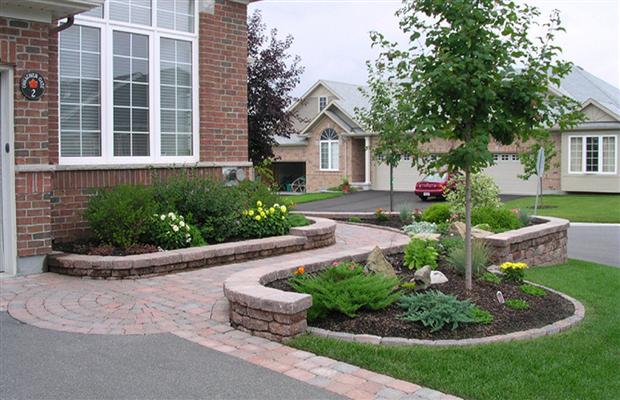
It doesn't matter if you're just starting out in a new home, thinking about selling, or stayin' put - buffing up the curb appeal of your house is an absolute must. How your home looks from the outside is the first impression viewers get of who lives inside.
And real estate agents will tell you when it comes to selling, there is no bigger turn-off than a messy front yard or sad-looking front door.
We gathered sage advice from area gardening and home professionals to help you spruce up the front of your house.
Clean up: The cheapest way to put a shine on the old address is to grab the rake and get busy.
Weed, trim edges for a clean appearance and prune and shape overgrown bushes. Snip off lower branches of pines for a good neat factor.
Add mulch or stones under cedars and around flower beds. Just like a new haircut, you will feel lighter by the end of the day.
Urban choices: Most of us live in the city, be it a tight bit of city bliss or in a suburb where neighbours are within touching distance. Choose trees carefully, says Trevor Cullen, co-owner of Cullen Landscaping on March Road.
Look for compact trees, including the Canadian Serviceberry or the Japanese Silk Lilac, suited to smaller urban lots. They will grow to 4.5 metres (15 feet). If you desperately love maples, be sure they are planted at least 12 metres (40 feet) from your house, says Cullen.
Think about eliminating fences and using joint walkways, garden beds and plantings on smaller suburban lots, especially when there are bungalow or two-storey townhomes, says landscape architect Welwyn Wong.
"Green can easily provide privacy and it sidesteps the choppy look of fences," says Wong, who planned a joint stone pathway, then added grasses, with neighbouring bungalow properties in Monarch's community of Stonebridge in Barrhaven.
ecreational gardeners: Younger people would rather go to the gym than work up a sweat in the garden, says Eva Schmitz, a veteran landscape architect and daughter of gardening gurus Edeltraut and Hans J. Schmitz Sr., founders of Artistic Landscape Design, which opened in 1955.
"They love to sit in their gardens, but they are busy with their children and they don't want to spend all day digging up clay beds," says the younger Schmitz.
"They are hiring professionals to do the hard work, preparing the flower beds, laying down walkways," says Schmitz.
She first noticed the shift three years ago when there was a drop in retail sales to individuals at the Bank Street nursery, while sales to professionals and gardening trades spiked.
Schmitz says many are hiring professionals to do the spring clean-up, do the edging, mulching and pruning and have the garden ready. They are recreational gardeners, with a coffee cup in one hand and trowel in the other.
Even boomers and pre-boomers, who spend hours in the garden, are hiring professionals to do the hard work, says Schmitz. "You have to have a strong back to do some of the work and backs aren't that strong as we get older."
Budget time: Many are hiring professionals to do the hard work, like building walkways, but are saving by paying for a master plan and then doing their own planting, says Schmitz, who meets with 30 to 40 clients each weekend, drafting designs for plant choices and hard landscaping such as walkways and retaining walls.
Four other designers are on a similar schedule. Artistic then does about 500 jobs a year; the rest leave with planting suggestions, ready to roll up their sleeves and invest sweat equity.
Access, the front door and porch: You can spend $28 on a quart of top-quality latex C2 paint from Randall's or go all the way and pay $3,200 for a top-quality steel and glass front door from Ottawa Windows and Doors.
For another $500 or $800 you get a piece of stained glass, says Mark Wardrop, president of the Colonnade Road company, adding there is a trend to larger glass inserts. "People tend away from full glass because of security, but they like bigger glass."
When it comes to colour, co-ordinate with trim work and the brick colour, says Jasmine Houghton, a colour specialist at Randall's Bank Street store. If the exterior is light then go with a dark colour on the door, says Houghton.
Avoid shocking colours, including minty greens or light blues. Dignified is better, says the paint consultant. Avoid emerald green and go with a deep green or a deep sage green.
Then match a new handset, picking up the colours in the glass. Check out Home Depot's smart key by Weiser for $199. Consider adding a helping of roar appeal with Lee Valley's solid brass lion door knocker. This hefty lion, priced at $39.50, can be teamed up with a splendid Preston Hardware bronze wall-mounted mailbox for $199.
Add a final touch with distinctive street numbers from Lee Valley. By Avalon, the oil rubbed bronze and brushed nickel numbers come in gift boxes and cost $19.99 each. They make a perfect home-warming gift for the new homeowner.
Pots & planters: It's best to avoid pots this summer if you live in the part of town under a water ban, says Eva Schmitz. "Many of my friends are just putting them away because they take a lot of water."
Small pots are also a problem because people just don't realize how quickly they dry out in the sun and how much water they need every day, she says. But given the right location, they add a colourful hit to your walkway, front door and patio.
Perpetual perennials: These can be your best friend, but choose wisely, says Schmitz. Look at the label and zones. Ottawa is Zone 4, so you want hardy plants that can survive tough winters without having to protect them. (See Ailsa Francis' top five survivors on page 4.)
Earth & all the dirt: It's discouraging to start a new garden in a suburban community because the top soil is so thin and the underlying layer is often Leda clay, which traps water, drowning new roots or sucking away valuable moisture.
This comes back to young recreational gardeners who dig, plant and then wonder why it doesn't prosper, says Schmitz. You need 30 centimetres (12 inches) of good top soil and builders often leave 2.5 to (one or two inches) of soil.
It's wise to hire a professional to bring in good soil, she says. Raised garden beds are often a smart solution in newer communities.
Annual brighteners: These are the performers that play a starring role in borders, adding colour between green shrubs. Your local nursery and grocery stores and big box outlets have a huge supply.
President's Choice recently had a flyer in the Citizen, boasting about its new Super Gigantico Red Fox Dragone Sunset Begonia for $6.99. Designed for a partial sun or shady location, the creamy yellow and pink blooms look spectacular. Talk to the experts.
Light up the night: There are solar energy lights to shine in your garden, to illuminated pots from President's Choice ($85) that light up the front walk, making sure visitors don't stumble or fall. Check out door carriage lights from suppliers including Multi Luminaire. Finishes range from white to wrought iron and an oiled brass and prices range from $64 up to $299.
When all is buffed, raked and planted, it's time to sit back, relax and enjoy all of your work.
Sheila Brady is on a buffing campaign, planting and painting the front entrance of her Kanata home. She is a regular contributor to homes and can be reached at sbrady.brown@gmail.
Monday, July 4, 2011
Secure your home against thieves before going on holiday
Talk about adding maddening insult to emotional injury. A day after a colleague had to put down his beloved German shepherd, his family home was broken into and ransacked. The front door was jimmied open, and every drawer in the home was pulled out, the contents tossed all over the floors.
The thief - or thieves - made off with a laptop computer, iPod, some cash and all his wife's jewelry. The police, who likely won't spend much time searching for the stolen goods, surmise the perpetrators were drug users seeking items they can easily sell on the street for pennies on the dollar.
My colleague said his wife remains upset and fearful. He feels violated, is very angry, and would dearly love to inflict some serious pain on those who brazenly entered his family's sanctuary.
But it's the inconvenience that disturbs him the most. He now has to find time to contend with the aftermath. He must continue to comfort his wife, then deal with insurance, security and repair issues.
And police say there's a likelihood the thieves might return in a month or so to steal the replacement items.
My colleague's experience got me thinking. If no one is home during the workday, or you plan to travel this summer, you can avoid becoming a victim by taking simple actions to secure your home.
A house sitter would be ideal, but if one can't be arranged, here are some tips:
Install a monitored security system. With today's advanced technology, there are many options.
Lock and bolt all doors and windows. Sliding doors require special devices to make them secure, such as a dowel or rod inserted through a hole drilled in the sliding door frame and projecting into the fixed frame. Commercial locks and window grilles are also available.
Treat the inside door from the garage into the house like an outside door. Lock and bolt it.
Leave something in plain view outside to give the appearance of family activity - gardening tools, toys, or water hose can all send a message someone is home. Buy a pair or two of size-18 men's shoes at a thrift store, then leave them outside the entrance door. There's nothing like the image of an Incredible Hulk to make a wouldbe intruder think twice about fooling with your home.
Put a radio, television, and interior and exterior lights on timers set according to your normal schedule. Leave some draperies and blinds open as well.
Stop your mail and newspaper deliveries. Ask a neighbour to remove the free regional newspapers and flyers from the front of your house. They don't take long to accumulate.
Get a family member or trusted neighbour to mow your lawn, move your vehicle occasionally and place a bag of their household trash in front of your home on collection day.
A home safe or safety-deposit box are great options for storing valuables, including jewelry and important home-and family-related documents.
Make sure shrubs and trees that cover windows and doors are trimmed so a burglar cannot use them as cover to gain access to your home.
Be certain tools, ladders and other objects that could be used to break into your home are locked up.
Don't hide keys under doormats or planters, or in a fake rock. Crooks check those places first.
No one expects to have their belongings stolen, so would you be able to remember every detail about your possessions? An up-to-date home inventory can help to determine exactly what items were stolen, and their value. Such an inventory would also be beneficial following a fire or other disaster.
Go through each room and list all contents. Be sure to include a description of all items, including rugs, furniture, books and lamps. Or use a voice recorder, then transcribe the details later. Back up your written inventory with photos or video. Store the inventory in a secure place outside the home.
I will be taking a one-month respite from writing this column. There are many projects to tackle in and around our home. I look forward to sharing my thoughts with you again in August. Meanwhile, have a safe, enjoyable summer.
Peter Simpson is the president and chief executive officer of the Greater Vancouver Home Builders' Association. Email peter@gvhba.org
© Copyright (c) The Vancouver Sun
The thief - or thieves - made off with a laptop computer, iPod, some cash and all his wife's jewelry. The police, who likely won't spend much time searching for the stolen goods, surmise the perpetrators were drug users seeking items they can easily sell on the street for pennies on the dollar.
My colleague said his wife remains upset and fearful. He feels violated, is very angry, and would dearly love to inflict some serious pain on those who brazenly entered his family's sanctuary.
But it's the inconvenience that disturbs him the most. He now has to find time to contend with the aftermath. He must continue to comfort his wife, then deal with insurance, security and repair issues.
And police say there's a likelihood the thieves might return in a month or so to steal the replacement items.
My colleague's experience got me thinking. If no one is home during the workday, or you plan to travel this summer, you can avoid becoming a victim by taking simple actions to secure your home.
A house sitter would be ideal, but if one can't be arranged, here are some tips:
Install a monitored security system. With today's advanced technology, there are many options.
Lock and bolt all doors and windows. Sliding doors require special devices to make them secure, such as a dowel or rod inserted through a hole drilled in the sliding door frame and projecting into the fixed frame. Commercial locks and window grilles are also available.
Treat the inside door from the garage into the house like an outside door. Lock and bolt it.
Leave something in plain view outside to give the appearance of family activity - gardening tools, toys, or water hose can all send a message someone is home. Buy a pair or two of size-18 men's shoes at a thrift store, then leave them outside the entrance door. There's nothing like the image of an Incredible Hulk to make a wouldbe intruder think twice about fooling with your home.
Put a radio, television, and interior and exterior lights on timers set according to your normal schedule. Leave some draperies and blinds open as well.
Stop your mail and newspaper deliveries. Ask a neighbour to remove the free regional newspapers and flyers from the front of your house. They don't take long to accumulate.
Get a family member or trusted neighbour to mow your lawn, move your vehicle occasionally and place a bag of their household trash in front of your home on collection day.
A home safe or safety-deposit box are great options for storing valuables, including jewelry and important home-and family-related documents.
Make sure shrubs and trees that cover windows and doors are trimmed so a burglar cannot use them as cover to gain access to your home.
Be certain tools, ladders and other objects that could be used to break into your home are locked up.
Don't hide keys under doormats or planters, or in a fake rock. Crooks check those places first.
No one expects to have their belongings stolen, so would you be able to remember every detail about your possessions? An up-to-date home inventory can help to determine exactly what items were stolen, and their value. Such an inventory would also be beneficial following a fire or other disaster.
Go through each room and list all contents. Be sure to include a description of all items, including rugs, furniture, books and lamps. Or use a voice recorder, then transcribe the details later. Back up your written inventory with photos or video. Store the inventory in a secure place outside the home.
I will be taking a one-month respite from writing this column. There are many projects to tackle in and around our home. I look forward to sharing my thoughts with you again in August. Meanwhile, have a safe, enjoyable summer.
Peter Simpson is the president and chief executive officer of the Greater Vancouver Home Builders' Association. Email peter@gvhba.org
© Copyright (c) The Vancouver Sun
Prince William and Kate Middleton to star-struck Quebec: 'À bientôt'

QUEBEC CITY - The citizens of Quebec got what Montreal did not: full unfettered contact and sightlines of the Duke and Duchess of Cambridge on their royal tour.
And they were treated to a speech by the eventual heir to the throne "tout en français," praising the "beauty" and "vitality" of Quebec and vowing to return.
Whether organizers in the capital did a better job, the police were more prepared or the secure location of the places the royals went to were the factors that counted is all debatable.
In the end, all that mattered was protesters were kept out of sight and in most cases out of earshot of the dignitaries and there was no threat of violence to William and Kate.
Quite a difference from the bum's rush the couple were given the day before in Montreal, where one photographer was certain she saw eggs lobbed at the royal convoy on the way to Ste. Justine Hospital and security became tight as a drum.
As a result of the safe and convivial atmosphere in Quebec, the attractive young couple went right up to the barricades to shake hands, take photos and speak to the star-struck crowds who whooped their approval and in some cases were still shaking minutes after their Cambridge connection.
“He said, ‘You better get down before you hurt yourself,” said Hannah Hoelscher of Rutland, Vt. She was standing on the lower rung of the metal crowd-containment barricades when William, much to her shock, came her way, surrounded by bodyguards.
“He asked where I was from and whether I drove all this way to see them, and I said of course. And then the big shocker was Kate who came by, too,” said the young American, whose hands were visibly shaking.
“This is a young and fun couple who really seem to care about everyone.”
An outdoor event at city hall at noon threatened with both bad weather and the promise of an ugly confrontation with members of an anti-monarchy group. But the deluge stopped in time and the 200 anti-monarchy protesters were kept more than a block away from the actual ceremony.
Their air horns and bagpipes were more than drowned out by the police escort that brought the convoy to the steps of city hall, where the Royals were met by Jean Charest and the mayor of Quebec City, Régis Labeaume.
Charest got huge cheers, but those were outdone when William and then Kate left the limo decorated with their specially designed insignia.
After walking up to the steps of city hall, William reviewed the assembled 2nd Battalion of the Royal 22nd Regiment in their red dress uniforms and with their goat mascot in tow.
Labeaume made a comment that the thousand people assembled were there for Charest and the premiere gamely laughed.
Then William addressed the crowd without a word of English, no mistakes and only a slight accent.
“À bientôt,” were his final words.
The royals were at city hall to celebrate the 403rd birthday of Quebec and The Freedom of the City ceremony that dates back to 1748, at a time when fortified or walled cities only permitted entry to armies who they knew to be friendly.
This ceremony permitted a friendly troupe with weapons and drums entry to the inside. The permission to come in was an honour but a necessity, as many armies at the time were no more than marauding gangs with little discipline.
The 22nd Regiment, known as the Van Doos (a corruption of vingt-deux), has its headquarters in the Citadelle and its regional headquarters in Quebec City.
asutherland@montrealgazette.com
© Copyright (c) The Montreal Gazette
Read more: http://www.montrealgazette.com/news/royal-visit/Prince+William+Kate+Middleton+star+struck+Quebec+bient%c3%b4t/5043219/story.html#ixzz1R8ss5WEy
Wednesday, June 29, 2011
Will and Kate on way, but royal influence everywhere in Canada already

OTTAWA — Until a royal tour sparks public interest — something Prince William and Catherine are about to do on a near-fanatic level — the Royal Family functions like a tasteful wallpaper pattern in Canada: enjoyable in an absent-minded way, but so ubiquitous as to be almost invisible.
From place names and currency, to commemorative plaques unveiled on long-ago royal tours, the symbolic presence of the monarchy is everywhere in Canada — which is exactly what makes many people forget about its significance.
Mail a letter and Queen Elizabeth II is likely to be on the stamp — which you can pay for with coins or a $20 bill also featuring her image. Walk into an airport, government building or school and there's probably a portrait of the monarch on the wall, though it might be a decades-old image of her younger, dark-haired self.
Visit a park or campsite and you might spend your weekend on Crown land, and you'll face the Crown in court if you run into trouble with the law — after being arrested by a police officer with the royal headgear on his badge, that is.
Chances are good that the monarchy is part of your daily commute, given that at least 228 Canadian cities have a Queen Street and 316 have a King Street (or Road or Crescent), along with countless schools, bridges, buildings and highways named for various members of the Royal Family, contemporary or long dead.
Prince Albert, Sask.; Victoria, B.C.; the Queen Elizabeth Islands in the Canadian Arctic; Charlottetown and Prince Edward Island itself: countless elements of this country bear royal names, but many of the origins have faded as they've become established parts of the Canadian atlas.
"Either we just don't pay attention to it so we don't know the connection — such as Regina, a lot of people don't know that's Latin for Queen — or if we do know, often it's seen through historical eyes, that these are streets named after a bygone era of history, colonial times," says Robert Finch, chairman of the Monarchist League of Canada.
Many Canadians are oblivious to the ubiquitous Crown as part of Canada's modern identity as a constitutional monarchy and don't know that the Queen arrives as "Queen of Canada," not an outsider, as is the case with the president of the United States, he says. Finch took to Twitter last week to point out the distinction that Will and Kate will "visit" the United States but "tour" Canada because they aren't considered foreigners here.
He says he believes the vintage of many of these symbols is to blame for the disconnect Canadians feel from "their" Royal Family: dusty portraits of a freshly coronated Elizabeth on many government walls have little connection to the white-haired great-grandmother who tours and appears in the news now.
"Before Canada Post turned monarchist, you used to get a stamp of the Queen and she had black hair," Finch says, laughing. "Where the symbols become a little more powerful or helpful in reminding Canadians about the monarchy is when they're relatively new designations and they involve members of the current Royal Family."
To that end, the world's most famous newlyweds could spark a new wave of namings and a stronger Canadian connection with the House of Windsor after their tour.
Canada Post issued stamps commemorating Prince William and Catherine's April 29 wedding and the Royal Canadian Mint — another of those nearly invisible "royal" elements of Canadian life — is doing the same with coins. Kevin MacLeod, the Queen's Canadian secretary, says he's already received a request to name a Duke and Duchess of Cambridge park somewhere in Ontario in advance of the royal tour.
"If you do a little digging, you'll see that there's a very special relationship," he says of the myriad royalty-related landmarks in Canada. "We kind of know the Crown is there, but we don't give it a lot of thought. We're surrounded by it, but on a day-to-day basis as we live our lives, are we conscious of it? I would venture to guess no."
With 60 years on the throne next year, the Queen herself has been "interwoven into the course of Canadian history" in a way that's easy to ignore, says Carolyn Harris, a royal expert and PhD candidate in history at Queen's University in Kingston, Ont. — an institution established by a royal charter from Queen Victoria in a city that was the Canadian capital until she picked present-day Ottawa to replace it.
"To some degree, it's taken for granted and there isn't always such a sense of historical context of how all of this came into being," she says. "A lot of times, people only see the visible manifestations, like these tours or the Queen on our money, as opposed to how the constitutional monarchy works and the structure of the Canadian state."
Both monarchists and republicans in Canada say this apathy toward the Crown is the greatest obstacle faced by those on the other side of the debate.
With the royals soon to arrive with their megawatt star status in tow, Finch says he believes the monarchy is about to get a boost in profile in a country festooned with its symbols — even if it's only temporary.
"It kind of reminds you of having an extended family and they visit every once in a while and you have a big event and you welcome them with open arms, but you probably don't miss them throughout the rest of the year," he says.
http://www.montrealgazette.com/news/royal-visit/Will+Kate+royal+influence+everywhere+Canada+already/5012163/story.html
Read more: http://www.canada.com/Will+Kate+royal+influence+everywhere+Canada+already/5012163/story.html#ixzz1QfV8OnC0
Monday, June 27, 2011
Stubbornness leads to many home mishaps

It's been said that necessity is the mother of invention, but I suspect it's stubbornness.
I don't think I've ever met a committed do-it-yourselfer who wasn't convinced he or she could do a job just as well as the pros -at the outset, anyhow. And when those DIYers don't know quite how to do something, they figure out a way.
Sometimes it works out. Sometimes the results are pretty hilarious.
Take Angela Gmerek's dad, for example. Seems her father, Bernie Gmerek of Jackson Township, Ohio, approaches fix-it projects with more of a can-do attitude than a sense of esthetics. Once, he left a mark on the living room ceiling while practising his golf swing and covered it with Wite-Out, "which, of course, was not the right match and stood out like a sore thumb whenever the light hit it just right," she wrote.
Angela Gmerek's favourite story had to do with his attempt to fix her car's leaking windshield. She was in college at the time and had left her car behind, so Dad decided to surprise her by fixing the leak before she came home for a visit. Afterward, he announced to her mother that the windshield had been fixed.
"Much to her horror, she looked out of the window to see that his solution was to caulk around the outside of the entire windshield with WHITE CAULK!!!" Gmerek related. "I never got a chance to see it, because she asked him if he wanted his daughter to drop dead on the driveway from embarrassment when she arrived home from school."
Ralph Singleton's experience was similarly misguided. As his wife, Susan, recalled, he ran into problems trying to install a new outdoor light fixture by the patio door of their Wadsworth, Ohio, home.
When she went to investigate the source of his frustrated rumblings, she found him struggling with the glass panels that were supposed to slide into place after the fixture was attached.
"These *!@#? panels keep falling out when I slide them in. They won't stay put," he complained. "It looks just like the picture on the box! Look at it!"
She did -and discovered the box was upside down. Michael L. Kelly donned his best do-it-yourself attitude when he and his wife, Sue, set out to remodel the bathroom of an apartment in their basement in New Franklin, Ohio. They ripped out a wall, expanded the room, moved the sink and added a tub with a shower.
When he started to put up the drywall, he realized the old wall framing was an inch-and-a-half out of plumb. Since he already had the plumbing in, he decided to use furring strips to build out the frame so the drywall would hang properly. But when he finished the drywall and tried to hook up the plumbing fixtures, he realized those fixtures were now too short.
"Needless to say, me being Irish, I get angry at the drop of a hat," he wrote. "However, my wife said she would fix the plumbing, so my anger was short-lived."
Kelly grabbed his reciprocating saw and started cutting into the wall above the shower fixtures, just where he claims his wife told him to. (I suspect a little shifting of the blame here, but I'll let the Kellys fight that one out.) He cut right through three waterlines.
After they got the pipes fixed and the mess cleaned up, they removed the protective liner from the new tub, only to find a 15-centimetre crack in it. They returned it to the store and exchanged it for a steel tub, because Kelly figured steel wouldn't crack. But when he got it home, the fixtures didn't match up to the openings in the new tub.
"I am getting madder by the minute," he recalled. Again he grabbed his reciprocating saw. Again he cut where his wife directed him to. Again he cut right through the waterlines.
Finally they got the plumbing fixed and the drywall finished, albeit with a few unsavoury utterances. They rented out the apartment and its newly remodelled bathroom.
Three weeks after their tenant moved in, she mentioned the bathroom ceiling had been leaking -for three weeks. She didn't think it was a problem, since the water was dripping into a sink.
When Kelly investigated, he discovered the ceiling was leaking around a drywall screw.
"When I reached up to touch it, the whole ceiling and about 40 gallons of water came crashing down on my head," he said. "Yes, I ran a drywall screw right into the plumbing."
He fixed the plumbing and installed drywall on the ceiling yet again. But before he left the repaired room, he said a little prayer.
"Because if I die and somehow wind up in hell," he explained, "it will be that bathroom."
© Copyright (c) The Victoria Times Colonist
Sunday, June 26, 2011
More boomers to buy condos...

The year 2010 ended on a high note for Toronto's condo market, according to statistics released in January by Urbanation. The fourth quarter of the year (October to December 2010) showed 6,280 new condominium sales, up from 3,805 in the quarter before.
"There was a huge jump in sales and that was directly relatable to the fact that we had 29 new projects and 6,500 units that launched in the fourth quarter," says Ben Myers, executive vice-president and editor of Urbanation, which tracks the Toronto condominium market. "A lot of those were large-scale projects and a lot of them did fairly well."
Investors are continuing to drive the market, he says, making "the bulk of the sales" for newly released condo projects before sites even have their grand openings to the public. But once that surge of sales is over, end users are the prime buyers; Urbanation tracks those existing new projects already on the market, too, where sales continue at the same average pace as they have for the past five to six years. "For the end users, that level hasn't changed, just the level of investor activity has improved," Mr. Myers says.
With a seven per cent to nine per cent increase annually in the price per square foot of condos in the city, it's no wonder investors are continuing to buy. Price per square foot rose from $352 in the fourth quarter of 2009 to $374 per square foot in the fourth quarter of 2010. "Increases like that provide investors with returns," Mr. Myers says.
While investors may be looking for returns, another buyer group — baby boomers — is considering something else: condo lifestyle. A certain segment of boomers is starting to see condos as a viable option, according to a recent report by TD Canada Trust, which tracked housing trends among boomers throughout Canada. The TD Canada Trust Boomer Buyers Report showed that while 61% of the boomers surveyed planned to look for a detached house with their next move, the next largest segment of the population — 24% — were looking at condos, citing the lack of maintenance, better security and amenities as deciding factors.
"We've seen so many condo developments, especially in Toronto, that you're at least seeing these boomers talking about condos, where in the past they haven't at all talked about them," says Farhaneh Haque, regional sales manager for the Mobile Mortgage Specialist area of TD Canada Trust. (Not that all of the boomers surveyed were convinced: 61% didn't like the idea of living in a condo because they didn't want to give up their backyard or garden, and 57 per cent didn't want to pay condo fees.)
So what does 2011 promise? According to Mr. Myers, Toronto can expect a slowdown compared to 2010 numbers — although with the 16,000 new condo sales he predicts within the city limits this year, sales certainly won't stop completely. "I still think it's going to be a pretty solid year," he says. "Based on quarter four, we may even have higher results than the 16,000—but I'll stick to my prediction for now."
http://www.househunting.ca/montreal/Condos/More+boomers+condos/4378845/story.html
© Copyright (c) National Post
Canada Post back-to-work bill clears House
A Conservative bill ordering 48,000 Canada Post employees back to work cleared the House of Commons on Saturday night after a marathon debate and several failed opposition efforts to win changes.
The House gave third reading to the bill shortly after 8 p.m. by a vote of 158-113 and then adjourned for summer.
The bill, which imposes a four-year contract and certain wage increases on the workers, now goes to the Senate, which has been called to sit at 11 a.m. ET on Sunday.
The back-to-work order would go into force 24 hours after receiving royal assent, Labour Minister Lisa Raitt told MPs.
While opposition members expressed fear for the rights of organized workers, Prime Minister Stephen Harper called the three days of round-the-clock debate over the bill "a completely unnecessary delay."
But Harper said he was pleased that "soon Canadians will again have access to their postal service, particularly small businesses and charities."
Third reading came at the end of a 58-hour filibuster, during which the opposition tried to either hold up or modify what it called a "draconian" bill — and after talks between Canada Post and the Canadian Union of Postal Workers collapsed again.
The Crown corporation locked out the employees on June 14, after the union conducted 12 days of rotating strikes.
Workers face binding arbitration
The back-to-work bill, introduced last Monday also imposes a form of binding arbitration in which each side would table its final offer and the arbitrator would pick one or the other. This provision and the imposed wage increases provoked the most debate.
Late Saturday afternoon, the House gave second reading to the bill, which then moved into committee-of-the-whole, the stage where the Opposition NDP and Liberals had hoped to propose changes.
At the opening of the committee debate, Raitt told MPs the postal dispute was expected to cause a "measurable" impact on the Canadian economy, with losses of between $9 million and $31 million a week.
"The parties in the dispute have tried again and again and again … and indeed there is no agreement in sight," she said.
But MP Thomas Mulcair, the deputy leader of the NDP, accused the Conservatives of rolling back the collective bargaining rights of workers.
"It's an indication of what's to come for other public service workers who are unionized," Mulcair said. "But it's also a signal from the Conservatives to all employers — in a union setting or otherwise — that it's an open bar. They can start going after the acquired rights of their workers."
As MPs voted on individual sections of the bill at the committee stage, it became clear the Conservatives weren't going to accept any changes.
One amendment sought by the NDP would have removed clauses forcing the two sides into final-offer selection by an arbitrator to end the dispute.
Another would have removed the salary provision of the bill, which the NDP said proposes a wage increase lower than what Canada Post had wanted to offer the union.
The Liberals favoured similar changes to end the "stubborn ideological debate" between the government and Opposition on the issue.
"The sterile and hopelessly polarized debate between left and right cannot go on forever," Bob Rae, the Liberal interim leader, said in a statement. "It's time for parliamentarians to put an end to this shambolic debate and find a solution to the impasse."
The New Democrats began the filibuster Thursday evening as MPs were scheduled to start their summer break. The non-stop stall continued all day Friday, with a setback for the NDP as Conservatives and Liberals joined to defeat a procedural motion.
Record for non-stop debate
The NDP had introduced a "hoist" motion to put off second reading for six months but failed to win approval after the Liberals joined the governing Conservatives to defeat it by a vote of 160 to 74.
MPs have set a record for non-stop debate on back-to-work legislation. The Conservative government says the old record of 27.5 hours was set in 1989.
Talks between Canada Post and the union collapsed late Wednesday, with pension issues at the heart of the stalemate.
Canada Post said there were discussions on Saturday morning, but they broke off and the two sides were still "far apart."
CUPW national president Denis Lemelin, who was seen mid-Saturday leaving Parliament Hill with other union officials, would not confirm whether talks had resumed.
With files from The Canadian Press
The House gave third reading to the bill shortly after 8 p.m. by a vote of 158-113 and then adjourned for summer.
The bill, which imposes a four-year contract and certain wage increases on the workers, now goes to the Senate, which has been called to sit at 11 a.m. ET on Sunday.
The back-to-work order would go into force 24 hours after receiving royal assent, Labour Minister Lisa Raitt told MPs.
While opposition members expressed fear for the rights of organized workers, Prime Minister Stephen Harper called the three days of round-the-clock debate over the bill "a completely unnecessary delay."
But Harper said he was pleased that "soon Canadians will again have access to their postal service, particularly small businesses and charities."
Third reading came at the end of a 58-hour filibuster, during which the opposition tried to either hold up or modify what it called a "draconian" bill — and after talks between Canada Post and the Canadian Union of Postal Workers collapsed again.
The Crown corporation locked out the employees on June 14, after the union conducted 12 days of rotating strikes.
Workers face binding arbitration
The back-to-work bill, introduced last Monday also imposes a form of binding arbitration in which each side would table its final offer and the arbitrator would pick one or the other. This provision and the imposed wage increases provoked the most debate.
Late Saturday afternoon, the House gave second reading to the bill, which then moved into committee-of-the-whole, the stage where the Opposition NDP and Liberals had hoped to propose changes.
At the opening of the committee debate, Raitt told MPs the postal dispute was expected to cause a "measurable" impact on the Canadian economy, with losses of between $9 million and $31 million a week.
"The parties in the dispute have tried again and again and again … and indeed there is no agreement in sight," she said.
But MP Thomas Mulcair, the deputy leader of the NDP, accused the Conservatives of rolling back the collective bargaining rights of workers.
"It's an indication of what's to come for other public service workers who are unionized," Mulcair said. "But it's also a signal from the Conservatives to all employers — in a union setting or otherwise — that it's an open bar. They can start going after the acquired rights of their workers."
As MPs voted on individual sections of the bill at the committee stage, it became clear the Conservatives weren't going to accept any changes.
One amendment sought by the NDP would have removed clauses forcing the two sides into final-offer selection by an arbitrator to end the dispute.
Another would have removed the salary provision of the bill, which the NDP said proposes a wage increase lower than what Canada Post had wanted to offer the union.
The Liberals favoured similar changes to end the "stubborn ideological debate" between the government and Opposition on the issue.
"The sterile and hopelessly polarized debate between left and right cannot go on forever," Bob Rae, the Liberal interim leader, said in a statement. "It's time for parliamentarians to put an end to this shambolic debate and find a solution to the impasse."
The New Democrats began the filibuster Thursday evening as MPs were scheduled to start their summer break. The non-stop stall continued all day Friday, with a setback for the NDP as Conservatives and Liberals joined to defeat a procedural motion.
Record for non-stop debate
The NDP had introduced a "hoist" motion to put off second reading for six months but failed to win approval after the Liberals joined the governing Conservatives to defeat it by a vote of 160 to 74.
MPs have set a record for non-stop debate on back-to-work legislation. The Conservative government says the old record of 27.5 hours was set in 1989.
Talks between Canada Post and the union collapsed late Wednesday, with pension issues at the heart of the stalemate.
Canada Post said there were discussions on Saturday morning, but they broke off and the two sides were still "far apart."
CUPW national president Denis Lemelin, who was seen mid-Saturday leaving Parliament Hill with other union officials, would not confirm whether talks had resumed.
With files from The Canadian Press
Friday, June 24, 2011
How to help your clients pick the right neighbourhood

How well do you know the neighbourhoods in which you ply your trade? There’s a big irony that goes with up-and-coming neighbourhoods and in a city with many neighbourhoods, Toronto realtor John Pasalis has seen it time and time again.
“There’s a huge emphasis on neighbourhoods,” says the president of Realosophy Realty, “but what I find is I get a lot of buyers interested in up- and- coming neighbourhoods until you show it to them. A lot of times, they’re thinking cool, young, and hip and then they see it. ”
Up-and-comers or those neighbourhoods on the cusp of being the next hot real estate market often start out as ugly, rundown districts bereft of the badges of gentrification such as young families and thriving commercial activity. Some are former industrial areas. The homeless or people living on the fringe reside there. Others are just old, outdated and untended neighborhoods that could use an injection of charm and vitality.
Six years ago, that was what clients thought of about Leslieville, Toronto’s east-end neighbourhood now known for vintage furniture shops, film studios and cafes. The then-derelict neighbourhood needed more than a little TLC. Today, Leslieville real estate prices have reached those of Riverdale and the Beaches.
At about the same time, Toronto realtor Steve Arruda began suggesting his clients look to Starbucks as a barometer for a neighbourhood’s upward evolution. Because the coffee giant does its research and has a good track record, he encouraged clients to consider investing in neighbourhoods in which a Starbucks was soon to open or had just opened.
“It’s the latte factor,” says Arruda, who owns Urbanopolis.com, a full-service realtor affiliated with Century 21. “If you see a Starbucks opening, it’s a catalyst for something happening soon. Starbucks don’t open at Jane and Finch. They open in neighbourhoods that are on the verge of something trendy happening.”
The benefit to either moving into or investing in a neighbourhood on the rise is that if you get in early enough there’s money, sometimes substantial money, to be made.
Those who are drawn to emerging neighbourhoods tend to be more creative and artistic types, says Pasalis. These people are often on a restricted budget and are trying to get into a neighbourhood so that they can put their stamp on it.
“The people who buy very early have the most to gain,” he says. “Neighbourhoods don’t appreciate at the same rate as across the whole city. Up-and-coming neighbourhoods typically double the appreciation rate of the city as a whole. So if a city house is appreciating at five per cent, the up and coming would be 10 to 12 per cent.”
So how do you determine the gold mines from the duds? The key, says Pasalis, is doing your homework and knowing what signs to look for. Here are his top three tips:
The first step is to pick a neighbourhood that will gentrify in five to eight years. To do that, look for the early signs of improvement such as people moving into the side streets, fixing up their homes, and adding curb appeal. Once that happens, it’s often followed by the neighbourhood’s commercial district, where you’ll see lively looking cafes and shops starting to open.
Established neighbourhoods that have already gone through gentrification often bound emerging neighbourhoods, he says. In the case of Leslieville, Riverdale, the Danforth and the Beaches, all well-established areas, flank the neighbourhood.
The second pointer Pasalis offers is that the houses in the neighbourhood must have some redeeming features. Curb appeal is critical. Victorian era homes are a good example of this. Their charm will appeal to younger buyers who often fuel the improvements in an emerging neighbourhood.
“The types of neighbourhoods that don’t appeal are older rundown houses that are completely different in style from one to the next,” says Pasalis. “That’s where one home is built in the forties and one in the eighties and they’re not in very good condition, maybe the aluminum siding is falling off. Even if an old Victorian is rundown, you can see the potential, whereas in a neighbourhood where all the houses are rundown, it’s less likely that that neighbourhood will change very soon.”
The third factor in trying to determine a neighbourhood ripe for improvement is to keep an eye on urban areas near main arteries that are close to transit.
Realosophy’s website (www.realosophy.com) offers dozens of very useful and free GTA neighbourhood profiles with a breakdown on schools, house pricing, restaurants and shops, how walkable a neighbourhood is, where the nearest Starbuck’s is and demographics on everything from average household income and languages spoken to the number of families with and without kids.
www.hoodreports.com offers similar information for real estate professionals willing to pay $299 for a one-year license. The fee means you can access information that helps define a neighbourhood based on such demographics as crime rates, schools, EQAO test results, ethnicities, closest transit, population density of the neighbourhood, the marital status of its residents, median incomes, types of dwellings and the age distribution of its population.
“One of the ROIs we demonstrated is that the time you spend looking for information requires lots of energy and effort,” says website co-owner Amit Garthani.“To do that for each client is a lot of work."
Garthani and his partner Ovi Comes started Hood Reports in February, 2010.
What realtor Glenn Perdue,who works for Remax Realty Specialists in Mississauga, likes about www.hoodreports.com is that it breaks down all sorts of statistical information based on the address he enters into the software. “If a client wants information on a specific house, I can pull up local schools and crime stats. A lot of people will ask if there are a lot of robberies in area. This shows it up front. It’s helpful and inexpensive.”
Perdue says the program is easy to use and the information can be emailed to clients even before they’re taken on a showing.
Information like this can fulfill consumers’ growing need to be well informed and educated before making a decision to buy. Once a client is armed with the report, their decision to buy or not to buy is generally reinforced.
“The(se types of reports) reports (don't) scare people away from purchasing a specific home. I think the more information the public has, though, the better position they’re in to make decisions.”
Gary Singh, a sale rep at Kingsbury, says many of his clients are interested in learning about a neighbourhood’s schools. Their second concern, though, seems to centre on what ethnicities comprise the neighbourhood in which they are looking.
What information do you collect when researching a neighbourhood? What do you find your clients are asking about today that they didn’t seem too concerned with a few years ago? What do you look for in a neighbourhood that is emerging in popularity? And what tools have you used to get this information to your clients?
Thursday, June 23, 2011
Balance for Canadian Housing Market: CREA
Stability, generally speaking, was the theme from last month, according to new data released by CREA. For many, after swings from high to low swift enough to cause motion sickness, this is welcome respite.
The report says, “Seasonally adjusted national home sales activity edged down by less than one per cent in May 2011 compared to the previous month. Among major markets were activity declines in Vancouver and Ottawa, offsetting gains in Edmonton and Toronto, where sales reached the second highest level on record for the month of May. “Actual sales activity was a manageable 2.7% higher in May 2011 than in April. This also marks the first year-over-year increase in over a year. Despite these gains, the tremendous volatility seen last year is expected to put downward pressure on year-over-year numbers for the coming months.
“The Canadian housing market has seen some big ups and downs in recent years, making national sales activity so far this year look like something of a Goldilocks story by comparison - not too hot, not too cold," said Gary Morse, CREA's President. "Since local housing market trends often differ from national trends, buyers and sellers should consult their local REALTOR® to understand how the housing market is shaping up where they live."
Again there was balance and stability with listings too, with gains in some regions offsetting drops in others. They fell in Vancouver, Fraser Valley and the Okanagan region, but rose modestly in Toronto and Montreal.
CREA paints a picture of balance: “With sales and new listings holding steady on a national basis in May, the resale housing market remained firmly planted in balanced territory. The national sales-to-new listings ratio, a measure of market balance, stood at 52.1 per cent in May, little changed from 52.5 per cent in April. “
"For the most part, sellers' markets became slightly more balanced than the previous month," said Gregory Klump, CREA's Chief Economist. "Toronto stood out as an exception, with sales activity there growing faster than new supply."
The sales-to-new listings ratio was reported to be between 40 % and 60%. Of the 101 Real Estate Boards in the country, 62 were balanced.
Looking at prices, skyrocketing prices in Vancouver are continuing to skew national prices upwards. The flood of foreign investors continues to snap up properties- many of them luxury ones- at top dollar. Toronto too, is placing upward pressure on prices across the country.
In May, the average price nationally was 8.6% over last year and rested at $376,817. If you take Vancouver out of the calculation, the average price comes back down to earth, increasing by only 5.6%. If you take out both Vancouver and Toronto, the average price is up only 3.7%.
"Changes in the national average home price reflect variations in home sales activity across and within local markets," said Klump. "Failure to recognize changes in the mix of sales activity can lead to misinterpretation of average price fluctuations. It can also give rise to faulty predictions of broadly based home price deflation by way of price correction."
Related Articles
BCREA: Sales Down, Prices Up
Big Banks Lowering Mortgage Rates
Balance Comes to Vancouver Island Area
Canadian Businesses to Fuel Economic Growth: CIBC
Home Ownership More Affordable: RBC
The report says, “Seasonally adjusted national home sales activity edged down by less than one per cent in May 2011 compared to the previous month. Among major markets were activity declines in Vancouver and Ottawa, offsetting gains in Edmonton and Toronto, where sales reached the second highest level on record for the month of May. “Actual sales activity was a manageable 2.7% higher in May 2011 than in April. This also marks the first year-over-year increase in over a year. Despite these gains, the tremendous volatility seen last year is expected to put downward pressure on year-over-year numbers for the coming months.
“The Canadian housing market has seen some big ups and downs in recent years, making national sales activity so far this year look like something of a Goldilocks story by comparison - not too hot, not too cold," said Gary Morse, CREA's President. "Since local housing market trends often differ from national trends, buyers and sellers should consult their local REALTOR® to understand how the housing market is shaping up where they live."
Again there was balance and stability with listings too, with gains in some regions offsetting drops in others. They fell in Vancouver, Fraser Valley and the Okanagan region, but rose modestly in Toronto and Montreal.
CREA paints a picture of balance: “With sales and new listings holding steady on a national basis in May, the resale housing market remained firmly planted in balanced territory. The national sales-to-new listings ratio, a measure of market balance, stood at 52.1 per cent in May, little changed from 52.5 per cent in April. “
"For the most part, sellers' markets became slightly more balanced than the previous month," said Gregory Klump, CREA's Chief Economist. "Toronto stood out as an exception, with sales activity there growing faster than new supply."
The sales-to-new listings ratio was reported to be between 40 % and 60%. Of the 101 Real Estate Boards in the country, 62 were balanced.
Looking at prices, skyrocketing prices in Vancouver are continuing to skew national prices upwards. The flood of foreign investors continues to snap up properties- many of them luxury ones- at top dollar. Toronto too, is placing upward pressure on prices across the country.
In May, the average price nationally was 8.6% over last year and rested at $376,817. If you take Vancouver out of the calculation, the average price comes back down to earth, increasing by only 5.6%. If you take out both Vancouver and Toronto, the average price is up only 3.7%.
"Changes in the national average home price reflect variations in home sales activity across and within local markets," said Klump. "Failure to recognize changes in the mix of sales activity can lead to misinterpretation of average price fluctuations. It can also give rise to faulty predictions of broadly based home price deflation by way of price correction."
Related Articles
BCREA: Sales Down, Prices Up
Big Banks Lowering Mortgage Rates
Balance Comes to Vancouver Island Area
Canadian Businesses to Fuel Economic Growth: CIBC
Home Ownership More Affordable: RBC
Subscribe to:
Posts (Atom)