While the Real Estate Market is relatively healthy in Canada, the same cannot be said for the rest of the world. According to the latest Real Estate trends report from Scotia Economics, many of the encouraging signs of recovery in various global markets over the past months seem to be faltering- and in some cases, even reversing direction.
"Increasing nervousness over global economic prospects alongside rising food and gas prices and persistently high unemployment are keeping potential buyers on the sidelines despite highly accommodative monetary policy," said Adrienne Warren, Senior Economist and Real Estate Specialist, Scotia Economics. "A lingering oversupply of housing and/or still tight credit conditions are reinforcing the downward pressure on sales and prices in a number of markets globally."
"A marked improvement in housing affordability, particularly in those regions suffering large valuation declines in recent years, will eventually put a firmer floor under prices and underpin a gradual turnaround for the sector," added Ms. Warren. "For the time being, however, the process of repairing bloated public and household balance sheets points to a protracted period of subpar economic growth among debt-heavy developed nations that will restrain household borrowing and spending. A generally more cautious lending environment also will hold back the pace of recovery."
In Canada, price appreciation has been a slow and steady race, with average inflation-adjusted home prices for Q1 up a respectable 5%, year-over year. Analysts warn too, that the national home prices do not necessarily reflect the nation region to region; prices have been inflated nationally due to surging prices in some pockets- namely from the wave of foreign investors flooding the Vancouver market.
Take Vancouver out of the equation, and prices have only appreciated a more realistic 1% year-over-year.
"Housing sales in Canada, while below the record-setting pace seen at the height of the boom in 2005-2007, are being supported by steady job creation and still attractive borrowing costs," stated Ms. Warren. "Relatively tight supply is adding to price pressures in several cities. Nonetheless, high home prices, the further tightening in mortgage insurance rules effective mid-March, and the upward drift in fixed mortgage rates this year appear to have slowed demand somewhat, most notably among first-time buyers. We anticipate relatively flat sales volumes and average prices through the latter half of the year."
Australia’s housing boom has faltered, partly due to the siege of natural disasters the region has been host to over the last year. Coupled with the fact that rising property prices are pushing boundaries of affordability, the housing market there is quickly running out of steam.
In Europe, troubled economies in various centres are causing some localized housing markets to sputter. In the UK, prices for Q1 were down 4%; in Spain, three years of a slow market seems to be continuing, with prices having fallen by 8%. Analysts warn that there is more of the same to come too.
Not all European markets were headed downwards in Q1. France and Switzerland saw price increases of 7% and 4% respectively.
In the U.S., the market is beginning to soften after some apparent momentum last year.
“The modest pickup in sales in the U.S. over the past six months has been primarily of investor-driven foreclosed properties, with little evidence of broader home buyer activity since the expiry of purchase incentives in early 2010," commented Ms. Warren. "Despite gradually improving job markets and near record housing affordability, the expected addition of at least another one million foreclosed properties to the market this year suggests more downside price risk in 2011."
Related Articles
Inflation slowdown brings hope interests rates will hold
Consumer Debt on the Rise in Canada
Monday, July 11, 2011

Friday, July 8, 2011
www.sendoutcards.com/dianelaflamme

Check this out.
https://www.facebook.com/video/video.php?v=1936300421534&oid=63982605873&comments
SEND OUT CARDS
Send Out Cards is a concept and service that is changing people’s lives. You can send a printed greeting card with your message in less than 60 seconds. You choose your card, write your message and click send. Send Out Cards prints the card and envelope, stuffs it and mails it – all for less than a greeting card at the store. There are over 16,000 cards to choose from. Sending cards with this system helps businesses keep in touch with their clients for a fraction of the cost of any other system. The cards can be personalized and campaigns at holiday season can be sent out. All contacts are entered into a Contact Manager System and can be sorted by groups. A wide selection of gifts can be sent with each card. Each gift is professionally packaged and mailed at a reasonable cost. With the help of the Picture Plus program, photos or graphics can be used to create individual or personal cards. The company has a customer service department which is very efficient.
In the first 5 years of business this company has generated over 150 million dollars in sales. It has sent over 50 million greeting cards and over 1 million gifts. Send Out Cards is privately held, is debt free and has virtually no competition.
Send Out Cards is a perfect solution for companies to remain in contact with their clients. When was the last time you thanked your client for their business? Do you think it would make a difference? Do you remember people’s birthdays and other special occasions? Do you think it matters to them?
The Value of Volunteering.......“You make a living by what you get. You make a life by what you give. “....Winston Churchill

There is something compelling about an individual who chooses to make a statement by civic action- by sharing the most valuable commodity of all- their time. While volunteering is ultimately about giving back, it also presents a rare opportunity to visibly translate words into action. Building social capital in client-centric business lends context to integrity in a way that no marketing plan can.
Sukh Sidhu, President of the Fraser Valley Real Estate Board, with over 28 years experience as a Realtor- as well as many years of volunteer service as a member on various industry related boards- and as a prominent member of the Indo-Canadian community, is well aware of the mesh between volunteering, visibility and client-centric business.
“Realtors care about bettering their community. They live where they work, and work where they live... It is about setting the stage for future business. Real Estate is people business, built on trust. Buyers and sellers trust you to help with the biggest purchase of their lives. In my experience, volunteer work builds that trust. People already know you, they trust you. They call who they already trust.”
There is no denying the far reaching impact of volunteering- both in acts of corporate citizenship, and in smaller, private acts, underscoring that making a difference is not about size or scale, but about commitment and directed action. Volunteer Canada lists in their mission statement, “Every action counts and people should be able to contribute in ways that work for them... voluntary organizations play a fundamental role in community health and vitality and are essential agents in building social capital.”
Volunteering Works
In the U.S., the National Realtors Association has recently awarded the third annual Volunteering Works awards. These awards identify Realtors who have made an impact in their individual communities in truly grass roots style.
True to the entrepreneurial spirit of Real Estate, these Realtors have assessed the communities in which they reside and/or work, and have identified need- and have taken it upon themselves to create solutions to the problems. This underscores another point- impact and social change does not necessarily have to reside in large-scale efforts. Big or small, it is about passion and action combining to make a difference.
For example, this year’s award recipients made their contributions relevant to social requirement. Causes included assisting parents with care giving for children with special needs, issues of abuse for women and their families, childhood literacy, substance abuse, support for divorced fathers to foster and maintain relationships with their children and providing real-life support in the way of repairs and home maintenance to allow seniors to stay in their own homes.
"Realtors play a significant role in building communities," says National Association of Realtors President Ron Phipps, broker-president of Phipps Realty in Warwick, R.I. "Volunteering Works highlights NAR members who are volunteering their time to answer a need in their community. We're proud to help them grow their efforts so they can serve even more people.”
While awards may seem contrarian to the concept of altruism, they help legitimize good works- as well as encouraging others to get involved. These awards seem less about identifying people and organizations, and more about getting the word out that people are making differences in their own communities- and is also about creating momentum in the volunteer movement.
Benefits: Personal and Otherwise
While volunteering your time is meant to benefit the organization that you are supporting, there are definite benefits to be reaped individually, and as part of a team.
Shanan Spencer-Brown, Executive Director of the Royal LePage Shelter Foundation, says that the positive results from volunteering are numerous: “There are a range of benefits. There is an opportunity to meet with diverse people, connect with the community, and build skills and career experience. People often welcome this break from routine- and see volunteering as a fun and creative experience- it is emotionally and intellectually rewarding. There is the chance to pursue new interests and/or hobbies...of course, the best reward is that it feels good to help others.”
In terms of team building, there is much to be reaped from the experience of volunteering as a group. Camaraderie, working towards a common goal- in this case helping others, can be both immensely appealing, and productive- particularly in industries where business for self is the operational situation.
The Royal LePage Shelter Foundation’s recent “National Garage Sale for Shelter” that raised over $400,000 in support of women’s shelters and ending violence against women and children, exemplified the concept of Realtors throwing down roots- and throwing their collective backs into a cause- with real, measurable results.
Says Spencer- Brown: “In terms of team building and volunteering, coming together for a cause that resonates with your entire office is a great way to forge strong relationships with your colleagues, and to learn from one another. Volunteering as a team also gives you greater capacity to help -- more people coming together to volunteer in support of a cause means greater potential to effect meaningful change; in addition, it means greater potential to raise awareness for the cause which can lead to an even greater number of volunteers.”
There is no question too, that volunteering represents an excellent opportunity for networking. You have a chance to meet and connect with large groups of people in a different context. And in a “people business “, face time is great time.
Branding
One of the challenges facing Mortgage and Real Estate Professionals is translating concepts like commitment, hard work, trust and accountability into real life situations to enhance brand. If your marketing plan is the theory behind your branding, volunteering provides a unique opportunity to visibly demonstrate these qualities.
Says Spencer- Brown: “Volunteering demonstrates commitment to giving back. It is about demonstrating that you are connected to the community.”
While you should devote your time to a cause that matters to you personally, there are definite benefits to participating in an established event, because these events often receive more media coverage- which can assist further in the expression of brand.
Spencer-Brown agrees: “Of course, there are additional benefits to being connected to a large, established event (like the Garage Sale for Shelter) because of extensive media coverage. There are benefits for offices too for branding, in aligning with a high profile event.”
Play it Cool
Never, ever, confuse a volunteer event with the boardroom. Being a volunteer is first and foremost about caring and connecting with the community. If, in the process of donating your time, you happen to cross paths with potential business- then great. If not, this is one of those times that asking for business may have the opposite effect.
Also, this underscores the point, that to be true to the spirit of volunteerism, motivations must be altruistic. Generating business is a pleasant by-product.
Sidhu comments: “Don’t promote business/listings (when volunteering). Do your work. When people need you, they will find you. Don’t push your agenda. Realtors are professional, and as part of the process, business will come in.”
Pick a Cause that Fits
While it often makes sense to align yourself with a cause that is employer-backed, it is often most productive to choose a cause that matters to you as an individual- although it is worth pointing out that the two are not mutually exclusive either.
What personal involvement in a cause does essentially is raise the level of personal investment, says Spencer- Brown: “The experience will be more rewarding and more meaningful if you have personal experience. You are better equipped, and are better able to speak to the cause- and you likely will show more empathy. Also, you are more likely to be more committed to the outcome, and will likely derive more personal satisfaction.”
In fact, the potential impact of choosing a cause that fits is so important, Volunteer Canada has now released a digital tool to help prospective volunteers understand and verbalize their volunteer needs.
“Creating an opportunity to address a disconnect between what Canadians look for in volunteer experiences and what organizations offer, ” Volunteer Canada has created the Volunteer Quiz ( VQ, ) which allows prospective volunteers to be classified under one of six personality types : Rookie, Roving Consultant, Type ‘A’, Groupie, Juggler, and Cameo.
The intent here is to match volunteers with organizations and types of volunteer work that they are likely to stick with in the long term, trying to move episodic volunteerism into an ongoing commitment.
“All Canadians have a role to play along a broad spectrum of engagement – everything from quick bursts of volunteering on mobile handsets to front-line volunteer aid in war-torn regions of the world,” said Ruth MacKenzie, President and CEO of Volunteer Canada. “The VQ can help boost volunteer engagement, but it’s essential to maintain a balance between episodic and long-term volunteering.”
To give an example of these volunteer personality types, the Groupie- much as it sounds, enjoys the group aspect of volunteering with a team, and the bonding and camaraderie that ensues from that experience. The VQ then recommends for this personality type to seek out opportunities with large organizations with short-term or one-day volunteer activities. The Roving Consultant, meanwhile, seeks work on specific short-term projects with real need for a specialized skill set.
As they say, charity begins at home- but for Real Estate and Mortgage professionals, that adage should be extended to include the entire community in which they work and live, because of the myriad of personal and professional benefits in supporting the community by being a volunteer.
And as Winston Churchill said, “You make a living by what you get. You make a life by what you give. “
Thursday, July 7, 2011
William and Kate spent night at secluded Skoki Lodge

CALGARY — Prince William and Kate Middleton spent Wednesday night at the secluded Skoki Lodge, a historic backcountry cabin 11 kilometres from the Lake Louise Ski Area, it was confirmed Thursday.
"It was all under the radar, incredibly cloaked from the top down," said Kurt Schroder, a spokesman for the Banff-Lake Louise Tourism Bureau, which issued a news release touting the royal visit as "a new royal legacy" for the historic lodge.
Although the tourism bureau still had no official confirmation from the royal tour about Skoki, Schroder said they pieced the information together from several sources, including "our partners in the tourism industry."
The lodge, built in 1931 and a designated national historic site, is owned and operated by Charlie Locke's Lake Louise Ski Area under a lease from Parks Canada.
"We just connected the dots through umpteem channels, like squirrels on the ground," said Schroder. "Like everyone else, we were following their movements yesterday from Slave Lake and from one tarmac to another. We knew they were not coming to Banff, so we suspected everywhere, from the Chateau Lake Louise to Lake O'Hara Lodge. We thought they might dip into B.C., but we're just glad they chose a place within Banff National Park."
Skoki Lodge was the first facility built specifically to cater to ski tourists on a commercial basis in Canada, and possibly North America, according to the tourism bureau. The log structure was built by a group of Banff residents who formed the Ski Club of the Canadian Rockies to manage the operation. Several log cabins were added between l935 and 1936 by Jim Boyce, a tour guide and outfitter.
An employee of the Chateau Lake Louise told the Calgary Herald Wednesday night that the royal couple were almost certainly staying at Skoki.
"We have friends who work there and they were busy preparing everything," she said, declining to be identified.
Skoki is normally accessible only on foot via a four-hour hike from the Lake Louise Ski Area, with seven of the 11 kilometre-route uphill.
Schroder believes William and Kate were helicoptered directly to the site.
The rustic lodge has outhouses for facilities, he said.
"It will be interesting to find out what improvements were made (for the royals)," he said.
Calgary Herald
rremington@calgaryherald.com
Read more: http://www.canada.com/news/royal-visit/William+Kate+spent+night+secluded+Skoki+Lodge/5063971/story.html#ixzz1RS6uoIse
Wednesday, July 6, 2011
Do We Get Better With Age?
Conventional wisdom says it’s good to be young. That, by the time you’ve been around long enough to understand how everything works, you’re too old to enjoy it.
Well, I’m going to challenge that and take on an issue that’s become a personal and professional battleground for many of you.
You see, jobs are at a premium and it’s not at all clear which generation, if any, is being discriminated against. Baby boomers tell me their jobs are going to younger and cheaper talent. But the data shows that younger people have far higher levels of unemployment.
Besides the jobs thing, there’s all that hoopla over generation gaps and generational profiling - real, imagined, or otherwise - between our aging population of baby boomers and Generation X, Y, Z, and who knows what comes next.
Here’s how I’d like to approach this big hairy issue, if I may. It’s a question for the ages if there ever was one: Do People Get Better With Age?
To start the conversation, I thought I’d list what, about you and me, gets better with age and what doesn’t. See what you think:
What gets better with age?
Experience. Now, experience may be overrated as a criteria for hiring and promoting, as we previously discussed, but that doesn’t mean it’s ever a bad thing. We gain confidence from our successes and learn real life lessons from our failures. It’s all good.
Management ability. For the vast majority, competence, functional skill, decision-making, most of the necessary ingredients for good management practice improves with age and, of course, experience.
Leadership ability. Confidence, humor, humility, empathy, virtually all leadership characteristics seem to improve with age. That’s why CEOs like Steve Jobs and Bill Gates became better leaders as they “grew up.”
Men. This is sure to be a controversial one, but, for the most part, men remain immature longer and tend to grow up much later than women do, at least in my experience. Simply put, I think men tend to become better people with age.
Comfort in your own skin. I guess temperament and maturity go along with that pretty well. The very act of growing up, getting experience under your belt, and getting to know yourself, people, and how the world works, tends to help most of us feel more comfortable in our own skin. At least, that’s the theory.
What gets worse with age?
Stamina. Whatever you do for a living or for fun, you can’t do it for as long as you used to, that’s for sure.
Staying in shape. On two separate occasions, in response to compliments about how good they looked, two aging, well-known silicon valley executives told me the same thing, “You have no idea how much it takes to look this good at my age.” Yup, it’s true.
Health. Allergies, eyes, hair, skin, joints, pain. I can go on and on about this, but it’s pretty straightforward that things don’t work as well as they used to, that’s for sure.
Hangovers. Yup, it’s a fact, older people just can’t party like they used to. The unfortunate result of a slowing metabolism.
Memory. I’m pretty sure this is biological fact, but I’m definitely sure you’ll let me know if I’m wrong.
Adaptability. This may be a myth; I’m not really sure. Still, I had to throw it in here and see what happens. It’s certainly age-old wisdom that we become more set in our ways, you can’t teach an old dog new tricks, that sort of thing. It clearly doesn’t apply to everyone and all things, but it might be a fairly accurate generalization.
That’s where I am on the debate. On the whole, I’d say that it’s a pretty mixed bag. That said, while the body does tend to deteriorate, personal and professional growth - in terms of ability, experience, competence, emotional intelligence, all that good stuff - would seem to more than compensate.
So, I’m going to come down on the side of aging being more or less a good thing. What do you think?
Related posts:
Gen Y: Solve Your Own Damn Workplace Issues
Why Generational Profiling is Bad Management
The Gender Pay Gap is a Complete Myth
Follow Steve Tobak on Twitter or Facebook
Well, I’m going to challenge that and take on an issue that’s become a personal and professional battleground for many of you.
You see, jobs are at a premium and it’s not at all clear which generation, if any, is being discriminated against. Baby boomers tell me their jobs are going to younger and cheaper talent. But the data shows that younger people have far higher levels of unemployment.
Besides the jobs thing, there’s all that hoopla over generation gaps and generational profiling - real, imagined, or otherwise - between our aging population of baby boomers and Generation X, Y, Z, and who knows what comes next.
Here’s how I’d like to approach this big hairy issue, if I may. It’s a question for the ages if there ever was one: Do People Get Better With Age?
To start the conversation, I thought I’d list what, about you and me, gets better with age and what doesn’t. See what you think:
What gets better with age?
Experience. Now, experience may be overrated as a criteria for hiring and promoting, as we previously discussed, but that doesn’t mean it’s ever a bad thing. We gain confidence from our successes and learn real life lessons from our failures. It’s all good.
Management ability. For the vast majority, competence, functional skill, decision-making, most of the necessary ingredients for good management practice improves with age and, of course, experience.
Leadership ability. Confidence, humor, humility, empathy, virtually all leadership characteristics seem to improve with age. That’s why CEOs like Steve Jobs and Bill Gates became better leaders as they “grew up.”
Men. This is sure to be a controversial one, but, for the most part, men remain immature longer and tend to grow up much later than women do, at least in my experience. Simply put, I think men tend to become better people with age.
Comfort in your own skin. I guess temperament and maturity go along with that pretty well. The very act of growing up, getting experience under your belt, and getting to know yourself, people, and how the world works, tends to help most of us feel more comfortable in our own skin. At least, that’s the theory.
What gets worse with age?
Stamina. Whatever you do for a living or for fun, you can’t do it for as long as you used to, that’s for sure.
Staying in shape. On two separate occasions, in response to compliments about how good they looked, two aging, well-known silicon valley executives told me the same thing, “You have no idea how much it takes to look this good at my age.” Yup, it’s true.
Health. Allergies, eyes, hair, skin, joints, pain. I can go on and on about this, but it’s pretty straightforward that things don’t work as well as they used to, that’s for sure.
Hangovers. Yup, it’s a fact, older people just can’t party like they used to. The unfortunate result of a slowing metabolism.
Memory. I’m pretty sure this is biological fact, but I’m definitely sure you’ll let me know if I’m wrong.
Adaptability. This may be a myth; I’m not really sure. Still, I had to throw it in here and see what happens. It’s certainly age-old wisdom that we become more set in our ways, you can’t teach an old dog new tricks, that sort of thing. It clearly doesn’t apply to everyone and all things, but it might be a fairly accurate generalization.
That’s where I am on the debate. On the whole, I’d say that it’s a pretty mixed bag. That said, while the body does tend to deteriorate, personal and professional growth - in terms of ability, experience, competence, emotional intelligence, all that good stuff - would seem to more than compensate.
So, I’m going to come down on the side of aging being more or less a good thing. What do you think?
Related posts:
Gen Y: Solve Your Own Damn Workplace Issues
Why Generational Profiling is Bad Management
The Gender Pay Gap is a Complete Myth
Follow Steve Tobak on Twitter or Facebook
Radiance of the Seas remodel lives up to ship's name. Royal Caribbean cruise ship leaves Victoria in tip-top shape

By Phil Reimer, for Postmedia News
My first impression after boarding Royal Caribbean's Radiance of the Seas in Victoria was that the ship was being decommissioned.
While the outside of the ship had not changed, at that point, the inside public areas were virtually gutted.
It turned out that Radiance, the oldest in of the Radiance Class ships, was being remodelled -refurbishing is a word that does not do it justice.
Built in 2001, the 2,500-passenger ship was taking on many of the successful features you will find on Oasis of the Seas and Allure of the Seas, the two biggest cruise ships in the world.
It can take months to remodel a home. However, when you have $30 million to spend and 1,000 workers at your service, you would be amazed at what can be accomplished in 21 days. When you add up the projects, there were 1,000, some lasting a few days, others lasting a few hours. With military precision, the Victoria Shipyard made it on time for the remodelled ship's first cruise to Alaska on June 10. This was also a chance for the yard to show off to the federal government, in hopes of getting a piece of the $35 billion earmarked for new and remodelled ships for the navy, and beyond, over the next few decades.
Radiance of the Seas was also being remodelled to save money. With a new special paint on the bottom of its hull and a few changes to the propulsion system, it will save 5,500 gallons of fuel a week.
This makeover is all part of the "Royal Advantage" program, which is being undertaken for older members of Royal Caribbean's fleet. Splendor of the Seas is next.
Radiance added seven new restaurants during its stay in dry dock and, yes, some have a price attached. Samba's, a Brazilian Churrasco-style restaurant -think meat -is $25 for dinner only. Giovanni's Table, for Italian dining, is $15 for lunch and $20 for dinner. Izumi, fashionably Asian Fusion, has à la carte pricing. The Park Cafe deli, the "Dog House" for those who love hotdogs, the Quill and Compass Pub, and Rita's Cantina's, a Mexican restaurant, are all part of your cruise price. Also opening will be the Chef's Table, at $95, one of the most expensive restaurants at sea and with room for only 16 guests each night. For your money, you get five courses and complimentary wine.
There's more. All staterooms will be refurbished with new flat-screen TVs and Wi-Fi in the cabins and all public areas. The public areas are getting miles and miles of new carpet. The pool was in the process of getting a new deck and the movie screen was bigger: 15 feet by 30 feet. It will be used for movies at night, specials and major sports events.
When it heads south for the winter, Radiance of the Seas will have a series of itineraries that include 12-night trips from Sydney to the South Pacific, including Nouméa, Vanuatu and New Caledonia, as well as the traditional 14-night cruises to New Zealand.
Thumping Canada's chest here, all the senior managers on this project were lavish in their praise of the Canadian workers. The captain, Claus Andersen, raved especially about the quality of the work being performed. That's high praise from a crew that works with shipyards around the world.
As for what it costs to cruise on this remodelled Radiance, here's one example: Vancouver to Seward (Anchorage), seven days, Sept. 2, $739.
Visit portsandbows.com for daily updates on the latest cruise news, best deals and behind-the-scenes stories from the industry. You can also sign up for an email newsletter on the site for even more cruise information.
Phil can be contacted directly at portsandbows@gmail.com.
~ Sounds wonderful............!
Tuesday, July 5, 2011
'Dooch' and duchess live it up on P.E.I.

CHARLOTTETOWN — The implications for dishwashing duties in the royal household are uncertain, but Team William emerged victorious over Team Kate in a dragon boat battle just outside Charlottetown on Tuesday, as the royal tour took a playful turn.
From William's feats at the controls of a Sea King helicopter, to a politician's cheeky marital advice, Prince Edward Island offered a relaxed seaside playground for the Duke and Duchess of Cambridge, and for the tens of thousands of ecstatic fans who turned out to welcome them.
"It is quite a moment for Catherine and me to be standing here in the Atlantic Canada, in front of Province House, where Canadian Federation was forged," William said in a speech before 20,000 cheering spectators outside the building where the seeds of the country were planted with the 1864 Charlottetown Conference.
"Here, in the crucible of Canadian nationhood, we look forward to meeting many of you."
Before William spoke, P.E.I. Premier Robert Ghiz welcomed the couple and emphasized the province's close ties with the monarchy, right down to its namesake, Prince Edward Augustus, Queen Victoria's father.
The tone in Charlottetown was markedly different than in Quebec, where fierce but peaceful anti-monarchy protests competed with the cheers of royal fans.
Indeed, just before Will and Kate emerged onto the steps of the provincial legislature, a raucous cheer went up from the crowd when a woman used her umbrella to block a sign saying, "You're not my prince," held aloft by a lone protester.
Ghiz concluded his speech by offering William some marital advice based on his own "five glorious years" of marriage to his wife, Dr. Kate Ellis Ghiz, who stood beside the duchess on stage.
"Your Royal Highness, it's very important to remember that Kates are always right," Ghiz said.
The lighthearted tone lasted into the afternoon, when island singer Meaghan Blanchard accidentally referred to William as "the dooch" while performing for the couple. As she and the royals both laughed, she insisted: "That did not happen."
In Charlottetown, fans began camping out Monday evening, including Chelsea Willis, 19, and Sarah Devoe, 20, who passed the night curled up in sleeping bags and refuelling on McDonald's and Tim Hortons coffee.
"You'll only see this once in your lifetime," said Willis, perched on a camping chair.
Read more: http://www.canada.com/news/royal-visit/Dooch+duchess+live/5045233/story.html#ixzz1RFrRIybG
How do you spell curb appeal?
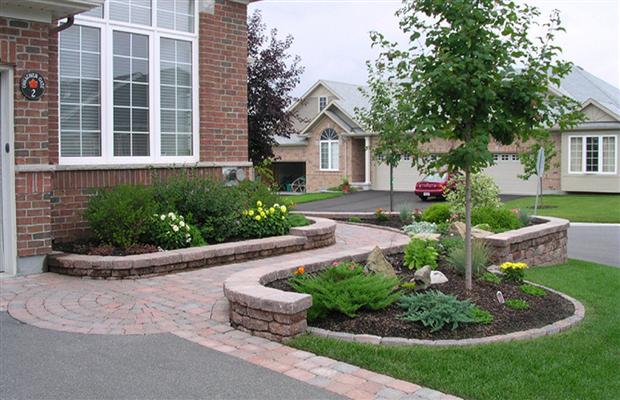
It doesn't matter if you're just starting out in a new home, thinking about selling, or stayin' put - buffing up the curb appeal of your house is an absolute must. How your home looks from the outside is the first impression viewers get of who lives inside.
And real estate agents will tell you when it comes to selling, there is no bigger turn-off than a messy front yard or sad-looking front door.
We gathered sage advice from area gardening and home professionals to help you spruce up the front of your house.
Clean up: The cheapest way to put a shine on the old address is to grab the rake and get busy.
Weed, trim edges for a clean appearance and prune and shape overgrown bushes. Snip off lower branches of pines for a good neat factor.
Add mulch or stones under cedars and around flower beds. Just like a new haircut, you will feel lighter by the end of the day.
Urban choices: Most of us live in the city, be it a tight bit of city bliss or in a suburb where neighbours are within touching distance. Choose trees carefully, says Trevor Cullen, co-owner of Cullen Landscaping on March Road.
Look for compact trees, including the Canadian Serviceberry or the Japanese Silk Lilac, suited to smaller urban lots. They will grow to 4.5 metres (15 feet). If you desperately love maples, be sure they are planted at least 12 metres (40 feet) from your house, says Cullen.
Think about eliminating fences and using joint walkways, garden beds and plantings on smaller suburban lots, especially when there are bungalow or two-storey townhomes, says landscape architect Welwyn Wong.
"Green can easily provide privacy and it sidesteps the choppy look of fences," says Wong, who planned a joint stone pathway, then added grasses, with neighbouring bungalow properties in Monarch's community of Stonebridge in Barrhaven.
ecreational gardeners: Younger people would rather go to the gym than work up a sweat in the garden, says Eva Schmitz, a veteran landscape architect and daughter of gardening gurus Edeltraut and Hans J. Schmitz Sr., founders of Artistic Landscape Design, which opened in 1955.
"They love to sit in their gardens, but they are busy with their children and they don't want to spend all day digging up clay beds," says the younger Schmitz.
"They are hiring professionals to do the hard work, preparing the flower beds, laying down walkways," says Schmitz.
She first noticed the shift three years ago when there was a drop in retail sales to individuals at the Bank Street nursery, while sales to professionals and gardening trades spiked.
Schmitz says many are hiring professionals to do the spring clean-up, do the edging, mulching and pruning and have the garden ready. They are recreational gardeners, with a coffee cup in one hand and trowel in the other.
Even boomers and pre-boomers, who spend hours in the garden, are hiring professionals to do the hard work, says Schmitz. "You have to have a strong back to do some of the work and backs aren't that strong as we get older."
Budget time: Many are hiring professionals to do the hard work, like building walkways, but are saving by paying for a master plan and then doing their own planting, says Schmitz, who meets with 30 to 40 clients each weekend, drafting designs for plant choices and hard landscaping such as walkways and retaining walls.
Four other designers are on a similar schedule. Artistic then does about 500 jobs a year; the rest leave with planting suggestions, ready to roll up their sleeves and invest sweat equity.
Access, the front door and porch: You can spend $28 on a quart of top-quality latex C2 paint from Randall's or go all the way and pay $3,200 for a top-quality steel and glass front door from Ottawa Windows and Doors.
For another $500 or $800 you get a piece of stained glass, says Mark Wardrop, president of the Colonnade Road company, adding there is a trend to larger glass inserts. "People tend away from full glass because of security, but they like bigger glass."
When it comes to colour, co-ordinate with trim work and the brick colour, says Jasmine Houghton, a colour specialist at Randall's Bank Street store. If the exterior is light then go with a dark colour on the door, says Houghton.
Avoid shocking colours, including minty greens or light blues. Dignified is better, says the paint consultant. Avoid emerald green and go with a deep green or a deep sage green.
Then match a new handset, picking up the colours in the glass. Check out Home Depot's smart key by Weiser for $199. Consider adding a helping of roar appeal with Lee Valley's solid brass lion door knocker. This hefty lion, priced at $39.50, can be teamed up with a splendid Preston Hardware bronze wall-mounted mailbox for $199.
Add a final touch with distinctive street numbers from Lee Valley. By Avalon, the oil rubbed bronze and brushed nickel numbers come in gift boxes and cost $19.99 each. They make a perfect home-warming gift for the new homeowner.
Pots & planters: It's best to avoid pots this summer if you live in the part of town under a water ban, says Eva Schmitz. "Many of my friends are just putting them away because they take a lot of water."
Small pots are also a problem because people just don't realize how quickly they dry out in the sun and how much water they need every day, she says. But given the right location, they add a colourful hit to your walkway, front door and patio.
Perpetual perennials: These can be your best friend, but choose wisely, says Schmitz. Look at the label and zones. Ottawa is Zone 4, so you want hardy plants that can survive tough winters without having to protect them. (See Ailsa Francis' top five survivors on page 4.)
Earth & all the dirt: It's discouraging to start a new garden in a suburban community because the top soil is so thin and the underlying layer is often Leda clay, which traps water, drowning new roots or sucking away valuable moisture.
This comes back to young recreational gardeners who dig, plant and then wonder why it doesn't prosper, says Schmitz. You need 30 centimetres (12 inches) of good top soil and builders often leave 2.5 to (one or two inches) of soil.
It's wise to hire a professional to bring in good soil, she says. Raised garden beds are often a smart solution in newer communities.
Annual brighteners: These are the performers that play a starring role in borders, adding colour between green shrubs. Your local nursery and grocery stores and big box outlets have a huge supply.
President's Choice recently had a flyer in the Citizen, boasting about its new Super Gigantico Red Fox Dragone Sunset Begonia for $6.99. Designed for a partial sun or shady location, the creamy yellow and pink blooms look spectacular. Talk to the experts.
Light up the night: There are solar energy lights to shine in your garden, to illuminated pots from President's Choice ($85) that light up the front walk, making sure visitors don't stumble or fall. Check out door carriage lights from suppliers including Multi Luminaire. Finishes range from white to wrought iron and an oiled brass and prices range from $64 up to $299.
When all is buffed, raked and planted, it's time to sit back, relax and enjoy all of your work.
Sheila Brady is on a buffing campaign, planting and painting the front entrance of her Kanata home. She is a regular contributor to homes and can be reached at sbrady.brown@gmail.
Monday, July 4, 2011
Secure your home against thieves before going on holiday
Talk about adding maddening insult to emotional injury. A day after a colleague had to put down his beloved German shepherd, his family home was broken into and ransacked. The front door was jimmied open, and every drawer in the home was pulled out, the contents tossed all over the floors.
The thief - or thieves - made off with a laptop computer, iPod, some cash and all his wife's jewelry. The police, who likely won't spend much time searching for the stolen goods, surmise the perpetrators were drug users seeking items they can easily sell on the street for pennies on the dollar.
My colleague said his wife remains upset and fearful. He feels violated, is very angry, and would dearly love to inflict some serious pain on those who brazenly entered his family's sanctuary.
But it's the inconvenience that disturbs him the most. He now has to find time to contend with the aftermath. He must continue to comfort his wife, then deal with insurance, security and repair issues.
And police say there's a likelihood the thieves might return in a month or so to steal the replacement items.
My colleague's experience got me thinking. If no one is home during the workday, or you plan to travel this summer, you can avoid becoming a victim by taking simple actions to secure your home.
A house sitter would be ideal, but if one can't be arranged, here are some tips:
Install a monitored security system. With today's advanced technology, there are many options.
Lock and bolt all doors and windows. Sliding doors require special devices to make them secure, such as a dowel or rod inserted through a hole drilled in the sliding door frame and projecting into the fixed frame. Commercial locks and window grilles are also available.
Treat the inside door from the garage into the house like an outside door. Lock and bolt it.
Leave something in plain view outside to give the appearance of family activity - gardening tools, toys, or water hose can all send a message someone is home. Buy a pair or two of size-18 men's shoes at a thrift store, then leave them outside the entrance door. There's nothing like the image of an Incredible Hulk to make a wouldbe intruder think twice about fooling with your home.
Put a radio, television, and interior and exterior lights on timers set according to your normal schedule. Leave some draperies and blinds open as well.
Stop your mail and newspaper deliveries. Ask a neighbour to remove the free regional newspapers and flyers from the front of your house. They don't take long to accumulate.
Get a family member or trusted neighbour to mow your lawn, move your vehicle occasionally and place a bag of their household trash in front of your home on collection day.
A home safe or safety-deposit box are great options for storing valuables, including jewelry and important home-and family-related documents.
Make sure shrubs and trees that cover windows and doors are trimmed so a burglar cannot use them as cover to gain access to your home.
Be certain tools, ladders and other objects that could be used to break into your home are locked up.
Don't hide keys under doormats or planters, or in a fake rock. Crooks check those places first.
No one expects to have their belongings stolen, so would you be able to remember every detail about your possessions? An up-to-date home inventory can help to determine exactly what items were stolen, and their value. Such an inventory would also be beneficial following a fire or other disaster.
Go through each room and list all contents. Be sure to include a description of all items, including rugs, furniture, books and lamps. Or use a voice recorder, then transcribe the details later. Back up your written inventory with photos or video. Store the inventory in a secure place outside the home.
I will be taking a one-month respite from writing this column. There are many projects to tackle in and around our home. I look forward to sharing my thoughts with you again in August. Meanwhile, have a safe, enjoyable summer.
Peter Simpson is the president and chief executive officer of the Greater Vancouver Home Builders' Association. Email peter@gvhba.org
© Copyright (c) The Vancouver Sun
The thief - or thieves - made off with a laptop computer, iPod, some cash and all his wife's jewelry. The police, who likely won't spend much time searching for the stolen goods, surmise the perpetrators were drug users seeking items they can easily sell on the street for pennies on the dollar.
My colleague said his wife remains upset and fearful. He feels violated, is very angry, and would dearly love to inflict some serious pain on those who brazenly entered his family's sanctuary.
But it's the inconvenience that disturbs him the most. He now has to find time to contend with the aftermath. He must continue to comfort his wife, then deal with insurance, security and repair issues.
And police say there's a likelihood the thieves might return in a month or so to steal the replacement items.
My colleague's experience got me thinking. If no one is home during the workday, or you plan to travel this summer, you can avoid becoming a victim by taking simple actions to secure your home.
A house sitter would be ideal, but if one can't be arranged, here are some tips:
Install a monitored security system. With today's advanced technology, there are many options.
Lock and bolt all doors and windows. Sliding doors require special devices to make them secure, such as a dowel or rod inserted through a hole drilled in the sliding door frame and projecting into the fixed frame. Commercial locks and window grilles are also available.
Treat the inside door from the garage into the house like an outside door. Lock and bolt it.
Leave something in plain view outside to give the appearance of family activity - gardening tools, toys, or water hose can all send a message someone is home. Buy a pair or two of size-18 men's shoes at a thrift store, then leave them outside the entrance door. There's nothing like the image of an Incredible Hulk to make a wouldbe intruder think twice about fooling with your home.
Put a radio, television, and interior and exterior lights on timers set according to your normal schedule. Leave some draperies and blinds open as well.
Stop your mail and newspaper deliveries. Ask a neighbour to remove the free regional newspapers and flyers from the front of your house. They don't take long to accumulate.
Get a family member or trusted neighbour to mow your lawn, move your vehicle occasionally and place a bag of their household trash in front of your home on collection day.
A home safe or safety-deposit box are great options for storing valuables, including jewelry and important home-and family-related documents.
Make sure shrubs and trees that cover windows and doors are trimmed so a burglar cannot use them as cover to gain access to your home.
Be certain tools, ladders and other objects that could be used to break into your home are locked up.
Don't hide keys under doormats or planters, or in a fake rock. Crooks check those places first.
No one expects to have their belongings stolen, so would you be able to remember every detail about your possessions? An up-to-date home inventory can help to determine exactly what items were stolen, and their value. Such an inventory would also be beneficial following a fire or other disaster.
Go through each room and list all contents. Be sure to include a description of all items, including rugs, furniture, books and lamps. Or use a voice recorder, then transcribe the details later. Back up your written inventory with photos or video. Store the inventory in a secure place outside the home.
I will be taking a one-month respite from writing this column. There are many projects to tackle in and around our home. I look forward to sharing my thoughts with you again in August. Meanwhile, have a safe, enjoyable summer.
Peter Simpson is the president and chief executive officer of the Greater Vancouver Home Builders' Association. Email peter@gvhba.org
© Copyright (c) The Vancouver Sun
Prince William and Kate Middleton to star-struck Quebec: 'À bientôt'

QUEBEC CITY - The citizens of Quebec got what Montreal did not: full unfettered contact and sightlines of the Duke and Duchess of Cambridge on their royal tour.
And they were treated to a speech by the eventual heir to the throne "tout en français," praising the "beauty" and "vitality" of Quebec and vowing to return.
Whether organizers in the capital did a better job, the police were more prepared or the secure location of the places the royals went to were the factors that counted is all debatable.
In the end, all that mattered was protesters were kept out of sight and in most cases out of earshot of the dignitaries and there was no threat of violence to William and Kate.
Quite a difference from the bum's rush the couple were given the day before in Montreal, where one photographer was certain she saw eggs lobbed at the royal convoy on the way to Ste. Justine Hospital and security became tight as a drum.
As a result of the safe and convivial atmosphere in Quebec, the attractive young couple went right up to the barricades to shake hands, take photos and speak to the star-struck crowds who whooped their approval and in some cases were still shaking minutes after their Cambridge connection.
“He said, ‘You better get down before you hurt yourself,” said Hannah Hoelscher of Rutland, Vt. She was standing on the lower rung of the metal crowd-containment barricades when William, much to her shock, came her way, surrounded by bodyguards.
“He asked where I was from and whether I drove all this way to see them, and I said of course. And then the big shocker was Kate who came by, too,” said the young American, whose hands were visibly shaking.
“This is a young and fun couple who really seem to care about everyone.”
An outdoor event at city hall at noon threatened with both bad weather and the promise of an ugly confrontation with members of an anti-monarchy group. But the deluge stopped in time and the 200 anti-monarchy protesters were kept more than a block away from the actual ceremony.
Their air horns and bagpipes were more than drowned out by the police escort that brought the convoy to the steps of city hall, where the Royals were met by Jean Charest and the mayor of Quebec City, Régis Labeaume.
Charest got huge cheers, but those were outdone when William and then Kate left the limo decorated with their specially designed insignia.
After walking up to the steps of city hall, William reviewed the assembled 2nd Battalion of the Royal 22nd Regiment in their red dress uniforms and with their goat mascot in tow.
Labeaume made a comment that the thousand people assembled were there for Charest and the premiere gamely laughed.
Then William addressed the crowd without a word of English, no mistakes and only a slight accent.
“À bientôt,” were his final words.
The royals were at city hall to celebrate the 403rd birthday of Quebec and The Freedom of the City ceremony that dates back to 1748, at a time when fortified or walled cities only permitted entry to armies who they knew to be friendly.
This ceremony permitted a friendly troupe with weapons and drums entry to the inside. The permission to come in was an honour but a necessity, as many armies at the time were no more than marauding gangs with little discipline.
The 22nd Regiment, known as the Van Doos (a corruption of vingt-deux), has its headquarters in the Citadelle and its regional headquarters in Quebec City.
asutherland@montrealgazette.com
© Copyright (c) The Montreal Gazette
Read more: http://www.montrealgazette.com/news/royal-visit/Prince+William+Kate+Middleton+star+struck+Quebec+bient%c3%b4t/5043219/story.html#ixzz1R8ss5WEy
Wednesday, June 29, 2011
Will and Kate on way, but royal influence everywhere in Canada already

OTTAWA — Until a royal tour sparks public interest — something Prince William and Catherine are about to do on a near-fanatic level — the Royal Family functions like a tasteful wallpaper pattern in Canada: enjoyable in an absent-minded way, but so ubiquitous as to be almost invisible.
From place names and currency, to commemorative plaques unveiled on long-ago royal tours, the symbolic presence of the monarchy is everywhere in Canada — which is exactly what makes many people forget about its significance.
Mail a letter and Queen Elizabeth II is likely to be on the stamp — which you can pay for with coins or a $20 bill also featuring her image. Walk into an airport, government building or school and there's probably a portrait of the monarch on the wall, though it might be a decades-old image of her younger, dark-haired self.
Visit a park or campsite and you might spend your weekend on Crown land, and you'll face the Crown in court if you run into trouble with the law — after being arrested by a police officer with the royal headgear on his badge, that is.
Chances are good that the monarchy is part of your daily commute, given that at least 228 Canadian cities have a Queen Street and 316 have a King Street (or Road or Crescent), along with countless schools, bridges, buildings and highways named for various members of the Royal Family, contemporary or long dead.
Prince Albert, Sask.; Victoria, B.C.; the Queen Elizabeth Islands in the Canadian Arctic; Charlottetown and Prince Edward Island itself: countless elements of this country bear royal names, but many of the origins have faded as they've become established parts of the Canadian atlas.
"Either we just don't pay attention to it so we don't know the connection — such as Regina, a lot of people don't know that's Latin for Queen — or if we do know, often it's seen through historical eyes, that these are streets named after a bygone era of history, colonial times," says Robert Finch, chairman of the Monarchist League of Canada.
Many Canadians are oblivious to the ubiquitous Crown as part of Canada's modern identity as a constitutional monarchy and don't know that the Queen arrives as "Queen of Canada," not an outsider, as is the case with the president of the United States, he says. Finch took to Twitter last week to point out the distinction that Will and Kate will "visit" the United States but "tour" Canada because they aren't considered foreigners here.
He says he believes the vintage of many of these symbols is to blame for the disconnect Canadians feel from "their" Royal Family: dusty portraits of a freshly coronated Elizabeth on many government walls have little connection to the white-haired great-grandmother who tours and appears in the news now.
"Before Canada Post turned monarchist, you used to get a stamp of the Queen and she had black hair," Finch says, laughing. "Where the symbols become a little more powerful or helpful in reminding Canadians about the monarchy is when they're relatively new designations and they involve members of the current Royal Family."
To that end, the world's most famous newlyweds could spark a new wave of namings and a stronger Canadian connection with the House of Windsor after their tour.
Canada Post issued stamps commemorating Prince William and Catherine's April 29 wedding and the Royal Canadian Mint — another of those nearly invisible "royal" elements of Canadian life — is doing the same with coins. Kevin MacLeod, the Queen's Canadian secretary, says he's already received a request to name a Duke and Duchess of Cambridge park somewhere in Ontario in advance of the royal tour.
"If you do a little digging, you'll see that there's a very special relationship," he says of the myriad royalty-related landmarks in Canada. "We kind of know the Crown is there, but we don't give it a lot of thought. We're surrounded by it, but on a day-to-day basis as we live our lives, are we conscious of it? I would venture to guess no."
With 60 years on the throne next year, the Queen herself has been "interwoven into the course of Canadian history" in a way that's easy to ignore, says Carolyn Harris, a royal expert and PhD candidate in history at Queen's University in Kingston, Ont. — an institution established by a royal charter from Queen Victoria in a city that was the Canadian capital until she picked present-day Ottawa to replace it.
"To some degree, it's taken for granted and there isn't always such a sense of historical context of how all of this came into being," she says. "A lot of times, people only see the visible manifestations, like these tours or the Queen on our money, as opposed to how the constitutional monarchy works and the structure of the Canadian state."
Both monarchists and republicans in Canada say this apathy toward the Crown is the greatest obstacle faced by those on the other side of the debate.
With the royals soon to arrive with their megawatt star status in tow, Finch says he believes the monarchy is about to get a boost in profile in a country festooned with its symbols — even if it's only temporary.
"It kind of reminds you of having an extended family and they visit every once in a while and you have a big event and you welcome them with open arms, but you probably don't miss them throughout the rest of the year," he says.
http://www.montrealgazette.com/news/royal-visit/Will+Kate+royal+influence+everywhere+Canada+already/5012163/story.html
Read more: http://www.canada.com/Will+Kate+royal+influence+everywhere+Canada+already/5012163/story.html#ixzz1QfV8OnC0
Subscribe to:
Posts (Atom)